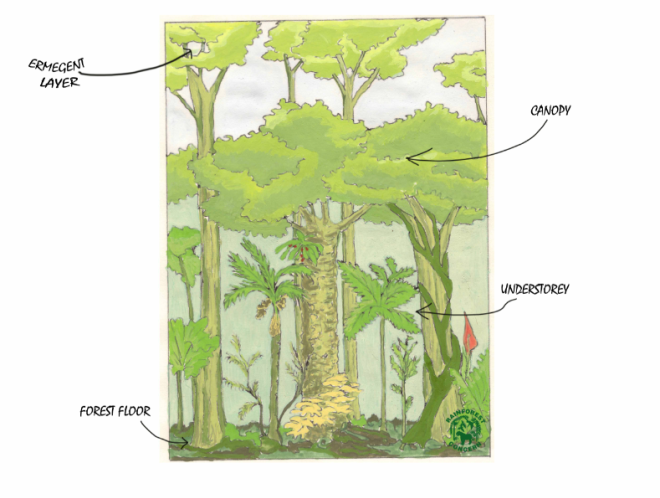
The rainforest canopy is divided into four main layers. From top to bottom these are the emergents, the canopy, the understory and the forest floor. These layers act as four interconnected vertically stacked habitats, fostering immense biodiversity.
“Emergents” are extremely tall trees which can grow to heights of over 80m (but are more typically closer to 50m) protruding from the forest canopy. In the Amazon rainforest the tallest emergent species is the Angelim Vermelho - the largest specimen ever measured was 88.5m tall with a 9.9m trunk circumference and estimated to be over 400 years old.
The forest canopy is a mostly continuous cover of foliage formed by adjacent treetops, approximately 10m thick. Although not all tall as the emergents, canopy trees are large, up to 45m tall. These trees are intertwined with lianas and hold flowering plants (called epiphytes) on their branches. This plant diversity hosts countless invertebrate species. These and the trees’ fruits and foliage feed thousands of bird, reptile and mammal species. The canopy is the most biodiverse forest layer.
Understory plants tolerate dim conditions; only about 5% of the sunlight shining on the canopy reaches the understory. Generally they have evolved large leaves to maximise photosynthesis. The understory contains the saplings that when fully grown will form the canopy and emergent layers. When a canopy tree falls, the understory and forest floor experience a period of explosive plant growth due to the spike in available light. Although not as biodiverse as the canopy, the understory houses abundant insect life and larger climbing animals, such as jaguars and anaconda.
The forest floor is relatively dark; on average only 2% of sunlight reaches this rainforest layer through the canopy and understory. Only plants evolved to tolerate very dim conditions can exist on the forest floor. Most tropical rainforests have surprisingly poor quality soils as rapid bacterial decay preventing humus accumulation. There are exceptions; rainforests that flood on a yearly basis, in Amazonia termed várzea or igapó, have relatively rich soils. Minerals (such as phosphorus from the Andes) and nutrients are deposited by the yearly floods, fertilising the soil and fuelling rapid plant growth.
The layers of the forest are connected and maintained in a perpetual cycle. Tree roots bind the soil together, while the canopy and trunks protect the soil from the erosive force of heavy rains. When an emergent or canopy tree dies, its trunk falls to the forest floor, where it decays and the nutrients it contains are recycled, fuelling fresh growth. If trees are removed from the forest (see deforestation, logging) their nutrients and physical protections are removed too. The unprotected soil is simply washed away in heavy rains, causing blockages and floods in lowland rivers, while leaving upland earth dry and unnaturally nutrient poor.