Leafy background

Restoring the Atlantic Forest, Brazil: Trees, Classrooms, and Community

Since late 2024, a partnership between Ephemeral Brazil and Rainforest Concern has been combining native tree planting with hands-on environmental education for secondary school students at Sítio Santo Adolfo in the state of Rio de Janeiro.
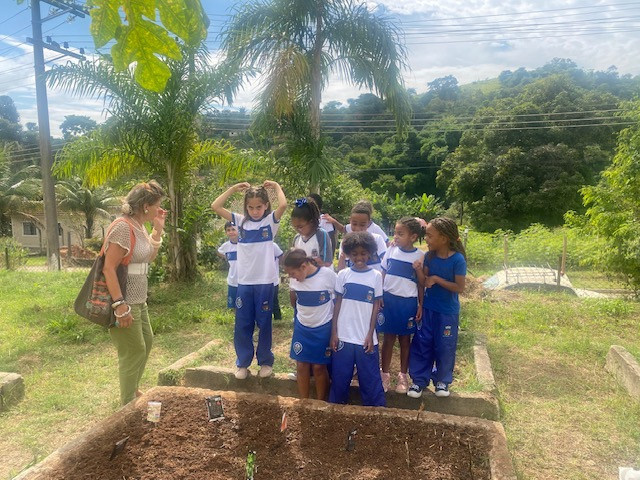
Santo Adolfo kids learn how to maintain saplings

The Atlantic Forest, once stretching over 15% of Brazil's land area, is today one of the most threatened tropical biomes on Earth - approximately just 12% of its original cover remains. The Rainforest Concern/Ephemeral Brasil partnership helps to address this loss through both direct planting and the education of the next generation of environmental stewards.

By linking youth environmental education with a real, actively managed restoration site, conservation is approached as a living practice that students can return to, rather than an abstract concept. This strengthens both the knowledge retained and engagement.

Environmental Education Programme

From May 2025 through November 2025, a series of environmental workshops brought students from a local state school into the forest at Sítio Santo Adolfo. Designated a "Projeto Piloto a Nível Estadual" (a state-level pilot project) the programme is the first of its kind for the region.

Each month, 35 students (ages 12-18) spent a morning at the site under the supervision of a forest engineer and two agronomists, accompanied by the school's biology teacher and a school director. A school meal was provided beforehand, sponsored by local farmers with an interest in the project. 210 students participated over the course of the programme .

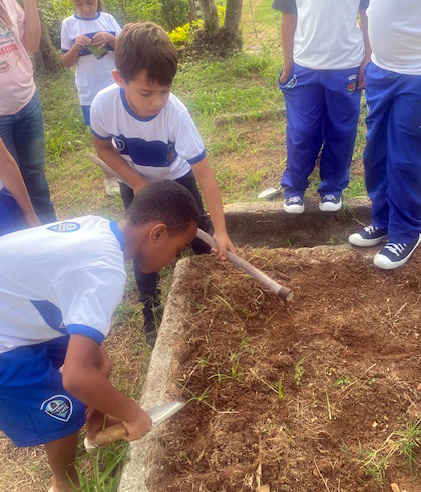
Santo Adolfo kids planting
School children helped plant saplings

Native Tree Replanting Programme

At Sítio Santo Adolfo 430 native saplings were planted and are now being nurtured on site. There is an emphasis on species that are characteristic of the Atlantic Forest.

Of the fourteen species planted several are of particular conservation relevance. Dalbergia nigra (Jacarandá Cabiúna) is listed on CITES Appendix II and classified as Endangered in Brazil, driven primarily by historic logging of its prized timber. Paubrasilia echinata (Pau Brasil) is similarly Endangered after centuries of exploitation for dye and musical instrument manufacture. Both Cariniana legalis and Cariniana estrellensis (the pink and white Jequitibás) are classified as Vulnerable, and Cedrela fissilis (Cedro) faces ongoing pressure from the cedar shoot borer (an insect) as well as selective logging across its range.

Planting these species within a managed and monitored site contributes directly to the recovery of their wild populations. Running educational visits will ensure that local young people grow up understanding what these plants are and why they matter.

Conservation status sources: IUCN Red List; Lista Nacional Oficial de Espécies da Flora Ameaçadas de Extinção (MMA/Brazil); CITES Appendix II.

Featured Articles

Closeui-chevron-nextui-chevron-prev