Leafy background

Expanding Protections of Freshwater Turtle Nesting Beaches in Brazilian Amazonia

In May 2026, Rainforest Concern secured funding to expand community-based protections of the freshwater turtle nesting beaches on the Rio Juruá, Brazilian Amazônia, in partnership with the local NGO Instituto Juruá. Protecting more nesting beaches is a conservation priority; on unprotected beaches the turtles are poached intensely.
freshwater turtle beach Juruá
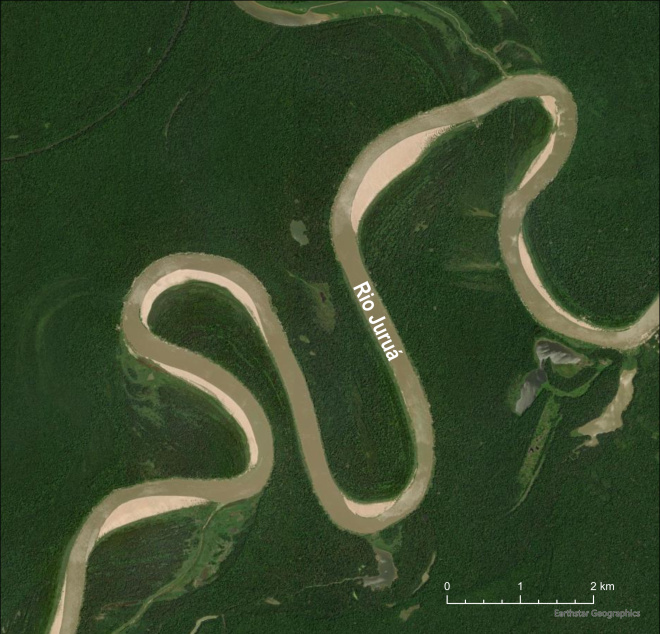
Juruá Fluvial Beaches
The meandering structure and fluvial beaches of the Rio Juruá, Brazilian Amazonia

A major tributary of the Amazon, the Juruá River is ~3,500 km long in Brazil alone (the Peruvian section is not quantified), and its floodplain features are highly complex, linking both aging and recent oxbow lakes. This area supports a rich environment in terms of biodiversity and rural livelihoods.
The fluvial sand beaches (pictured) along the main course of the Juruá are the natural nesting sites of three species of freshwater turtles; the giant Amazon River turtle (Podocnemis expansa, IUCN - Conservation Dependent), yellow-spotted river turtle (P. unifilis, IUCN Vulnerable [VU]), and six-tubercled Amazon River turtle (P. sextuberculata, VU).
 

This region of Western Brazilian Amazonia is super-biodiverse; the project area provides key habitats for many additional species. The nesting beaches also support important breeding populations of several key migratory waterbird species, including the Orinoco goose (Neochen jubata, Near Threatened), black skimmer (Rynchops niger), jarge-billed tern (Phaetusa simplex) and other transcontinental migrants such as sandpipers and osprey (Pandion haliaetus).

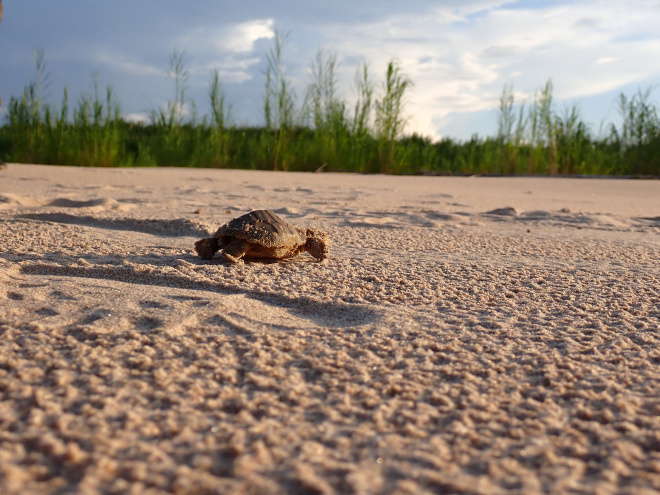
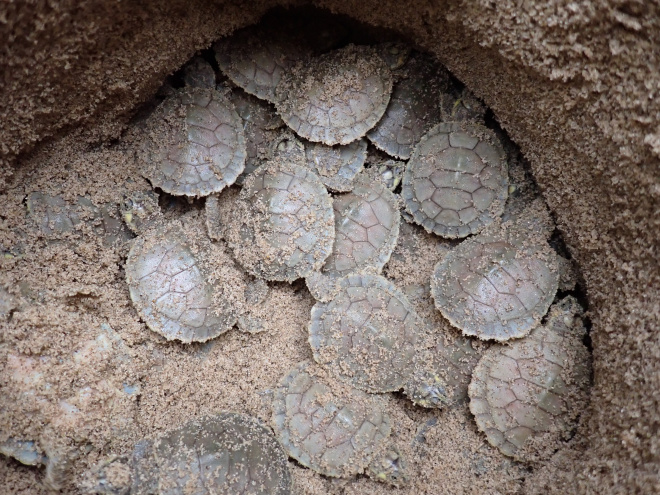
Jurua turtle nest
A giant Amazon River turtle nest, excavated to assess the health of the hatchlings. They were released directly into the river afterwards so as not to artificially expose them to circling vultures

Unprotected Juruá beaches have extremely low turtle hatching success rates. At the start of the season the pregnant mothers are vulnerable: whilst waiting at the base of the beaches for the ideal timing to lay their eggs, poachers can easily net them, stack them in their boats (alive so as to remain fresh), and later kill them for meat. On unprotected beaches the eggs that are successfully laid are easy for poachers to find; they simply follow the tracks of the mother from the river and excavate the nest, a process which can take less than ten minutes. The IUCN Red List categorises the giant Amazon River turtle’s status as “Conservation Dependent” - currently they only survive/thrive where there are conservation efforts in place.


Protection of the beaches is a community-based conservation arrangement, where local people play a positive role in biodiversity conservation. Local beach guards protect the fluvial beaches (on a 24-by-7 basis) during the nesting season, driving away poachers, often in challenging conditions. This has proved immensely beneficial for the conservation and welfare of the turtles; they can now lay their eggs in peace on protected beaches with the hatchlings no longer threatened by humans and thus reaching the river.

The existing protected beaches provide proof-of-concept for the proposed project to expand and improve protections:

1) On average, on protected beaches the number of Giant Amazon turtle nests increased by 11.4 times (on average) and the number of hatchlings per beach by 9.7 times.

2) An average of 71,087 additional hatchlings are released annually on protected beaches.

3) Reports of recovery in adult turtle populations have been confirmed by fishermen in 52 communities near protected beaches.

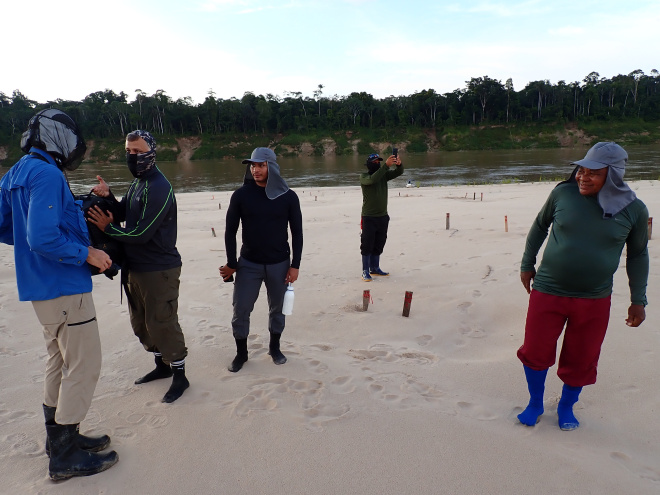
Instituto Jurua and Rainforest Concern Team learn about turtle nesting beach protections
The Instituto Juruá and Rainforest Concern team are taught about turtle beach protection by Bomba. Bomba (right) is a conservation legend, founding one of the first protected beaches in 1992 and protecting it ever since.

This project will found ten new protected beaches. Over the coming years, this will lead to hundreds of thousands of additional hatchlings reaching the river.

This work is part of a larger conservation program that Instituto Juruá is growing, ensuring the alignment of biodiversity protection and improvements to local well-being. Over the coming decades this model can be expanded to other river-basins across the Brazilian Amazon, it is a landscape-scale conservation flagship project.

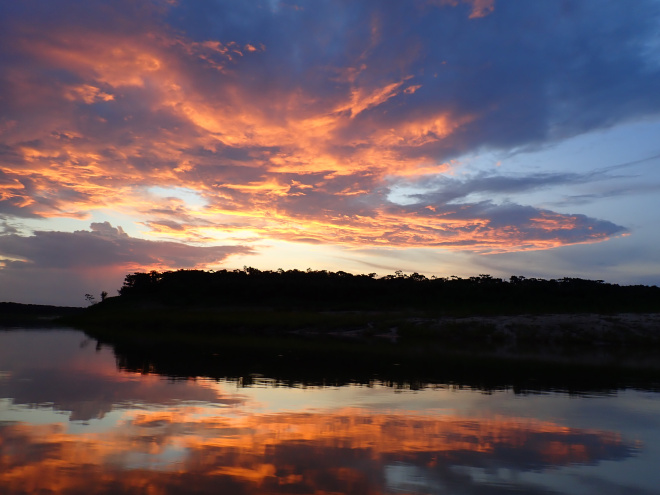
Juruá sunset
Sunset on the Rio Juruá

Featured Articles

Closeui-chevron-nextui-chevron-prev