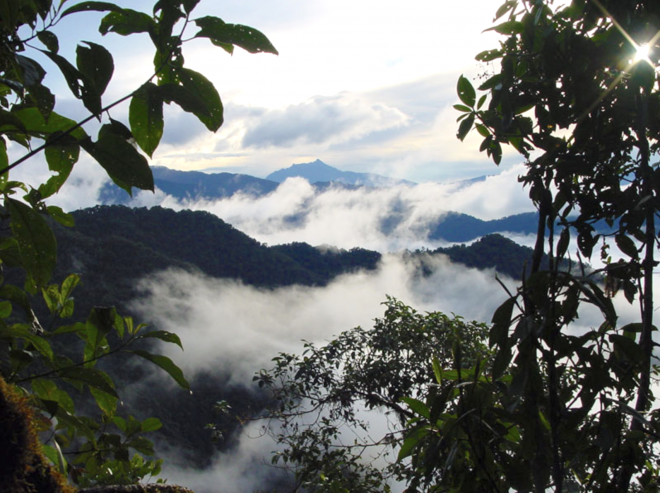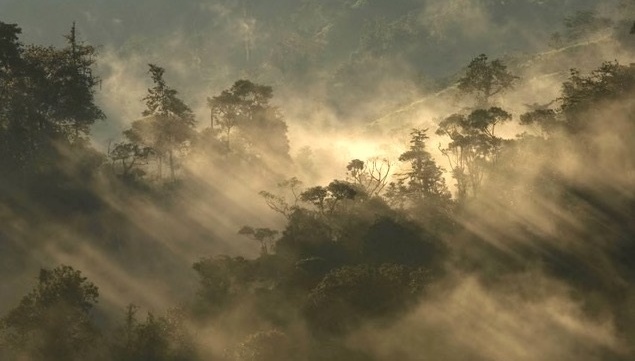
Rainforest Concern has been working to develop the Chocó Andean Corridor Project, in northwest Ecuador, since 1993. The southern phase of the corridor is located at the confluence of two of the world’s biological ‘hotspots’: the Chocó-Darien and Tropical Andes (1). The idea is to create habitat connectivity that aids species survival by linking the last unprotected forests between the Maquipucuna, Mindo y Pululahua reserves to the Cotacachi Cayapas Ecological Reserve and following north to the Awa Reserve in the province of Esmeraldas (see map below).
(1) Conservation International (2008) Biodiversity Hotspots Available at http://www.biodiversityhotspots.org/Pages/default.aspx
Rainforest Concern is working in the following areas of the Corridor Project:
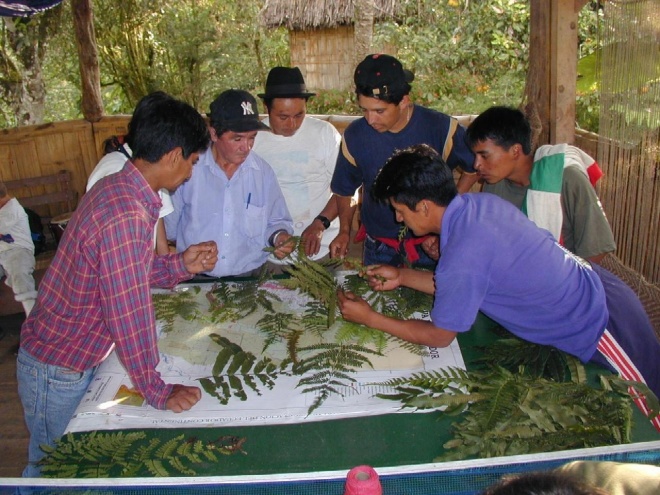
The Santa Lucia cloud forest reserve is located about 80 km northwest of Quito, in the province of Pichincha. This is the southern end of the Chocó-Andean Rainforest Corridor. Rainforest Concern has for many years supported the Santa Lucia Co-operative, a community-based organisation dedicated to conservation and sustainable development. Their aim is to make a modest living whilst conserving their remaining cloud forest through projects such as ecotourism, reforestation, small agroforestry plantations and environmental education. The community owns 780 hectares of montane cloud forest, of which about 80% is still in its prime, virgin state, and the reserve has been declared a Bosque Protector (Protected Forest). Please go to the Santa Lucia website for more information, or click here for our 2010 newsletter update (pdf format).
VIEW CAMERA TRAPPING FROM THE SANTA LUCIA CLOUD FOREST RESERVE: A chance to see elusive wildlife such as spectacled bears, pumas and deer.
The Paso Alto mountain range lies between the Santa Lucia Cloud Forest Reserve and the Cotacachi Cayapas Ecological Reserve. Since the end of 2006 we have been funding an agroforestry project in two of the communities in the buffer zone of the forest in the Pamplona and Daule Watersheds, with a focus on producing shade-grown coffee, which, after 3 years of work, has now started to generate income for the local community. This project has enabled 5000 hectares to receive the official declaration of Protected Forest Status, which required work with local residents to find environmental and economic alternatives to ‘slash and burn' subsistence farming. Please click here for our 2010 newsletter update (pdf format).
Since 2003, through generous donations from its members and supporters, Rainforest Concern has been able to purchase areas of forest to protect in an area between the Paso Alto Mountain Range and the Cotacachi Cayapas Ecological Reserve, known locally as Intag. The intention has been to link these two protected areas through land purchases, creating one continuous corridor. We have named this area the Neblina Reserve, and to date it comprises 1,312 hectares of montane cloud forest, which has been declared Protected Forest in the national protected areas system. The Neblina Reserve has also become the first project in Rainforest Concern's new Forest Credits programme. Please click here for our 2010 newsletter update (pdf format).
In 2003, Rainforest Concern succeeded in creating a corridor between the Cotacachi-Cayapas Ecological Reserve and the Awa Indigenous Reserve in northwest Ecuador. Over 10,000 hectares of primary rainforest were purchased, in direct competition from palm oil and timber companies, and a programme of sustainable income generation has been established with the Afro-Ecuadorian communities in the area. This project was undertaken with our partners Fauna & Flora International and the Ecuadorian organisation NYTUA. This project is now being managed locally by Fundación Sirua.
Since 1999, Rainforest Concern and the Yachana Foundation, formally FUNEDESIN, have been working together in the rainforests of the indigenous Quichua people, conserving and protecting habitat and encouraging them to become stewards of their own resources. Since then, we have added approximately 1,500 hectares of land to a reserve in the Gran Sumaco National Park (which now totals 1,740 hectares), where 2 new species of Glass Frog have been discovered. We have also provided support against loggers and poachers, we encourage overseas volunteer programmes and assist Yachana's self-sustainable community projects with the indigenous Quichua people which include the processing and marketing of cacao. Please click here for the latest available (2009) newsletter update (pdf format).
The area with a red border shows the latest purchase of 155 hectares.
Frequently Asked Questions Click here to view frequently asked questions about the Chocó-Andean Corridor project.
Visit our Ecuador projects Click here to view opportunities to visit our projects.Volunteering opportunities Click here if you would like to volunteer at one of our projects.