M Cooper 6 SC5309

Ecuador Los Cedros Reserve

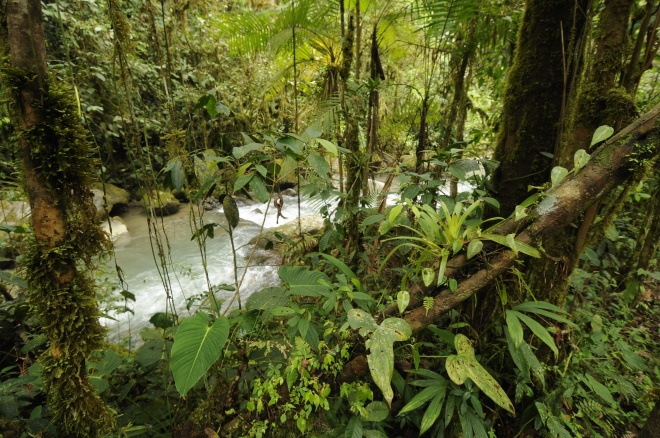
The Los Cedros Reserve, in north-western Ecuador, is within the Tropical Andes Biodiversity Hotspot

Los Cedros Reserve

José DeCoux teamed up with several organisations to establish the Los Cedros Reserve in 1988 in north-western Ecuador. Los Cedros protects 4,800 hectares of super-biodiverse Andean montane cloudforest, 85% of which is primary forest. In addition to its intrinsic biodiversity value, Los Cedros acts as a connected buffer zone to the 182,109 hectare Cotocachi-Cayapas National Park to the north. Rainforest Concern has supported and been a partner to Los Cedros since 2003
Research and biodiversity

Los Cedros has hosted dozens of scientists and therefore has been the subject of an immense amount of ecological and conservation research. This research universally highlights the ecological quality and biodiversity of the forest, proving the effectiveness of conservation efforts. 

Mammals

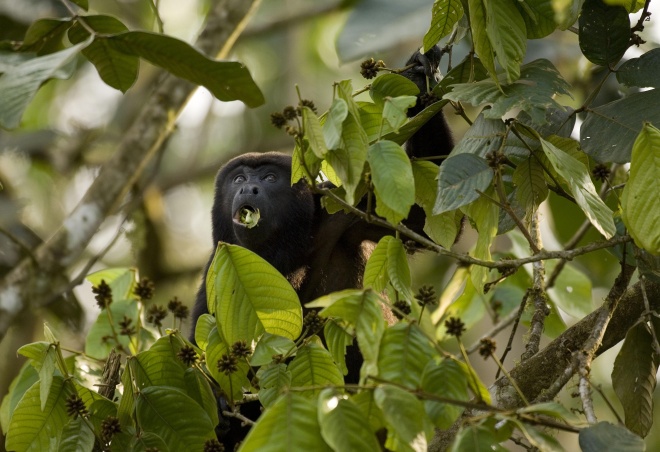
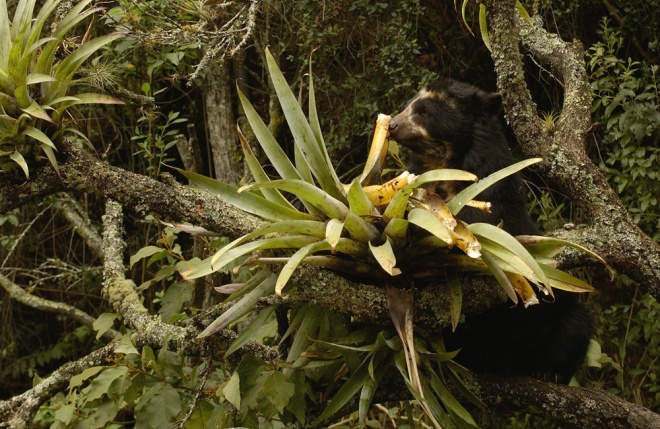
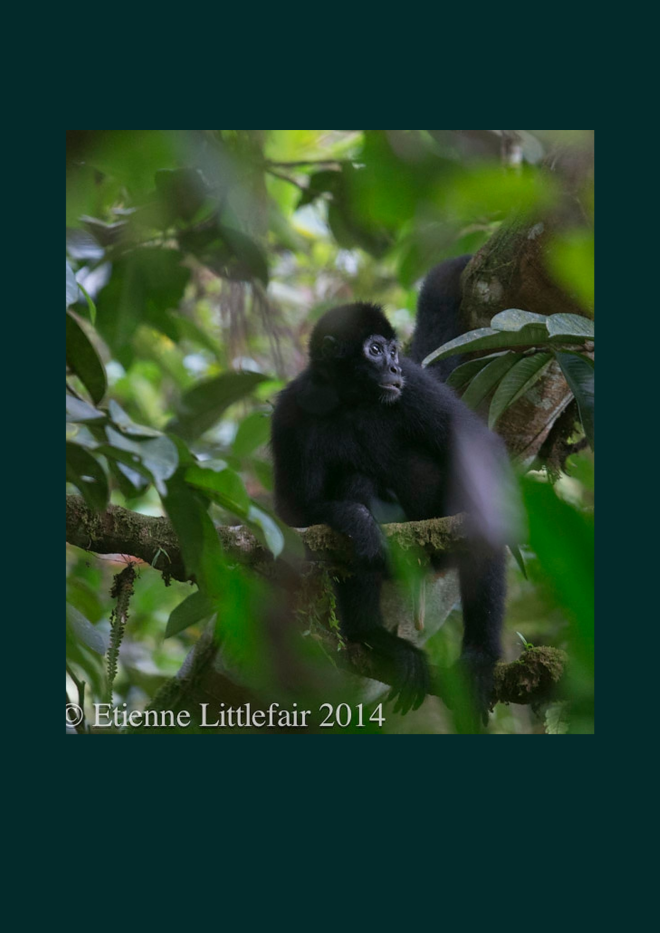
Six felid species have been recorded in Los Cedros: the jaguarundi, margay, ocelot, oncilla, puma, and the western subspecies of jaguar. The Ecuadorean mantled howler monkey is frequently heard in the morning chorus, this is the loudest of the three species of primate in the forest. The two other primates are white-headed capuchin monkeys and one of the last remaining populations of the critically endangered brown-headed spider monkey (Ateles fusciceps ssp. fusciceps). The only species of South American bear, the spectacled bear, inhabits the higher elevations of the reserve. 
 

Species Spotlight

Brown-headed Spider Monkey

Brown headed spider monkey, credit: Etienne Littlefair

They are primarily fruit eaters and this makes them very important to disperse seeds as they pass through the forest. They use their hands, feet and prehensile tail to swing across branches and can leap up to 9 metres. They live in groups of approximately 20 and spend most of their time in the trees, active during the day, sleeping at night.

Birds

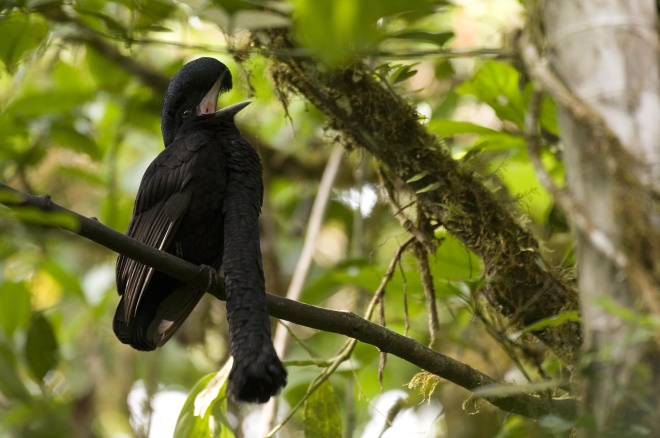
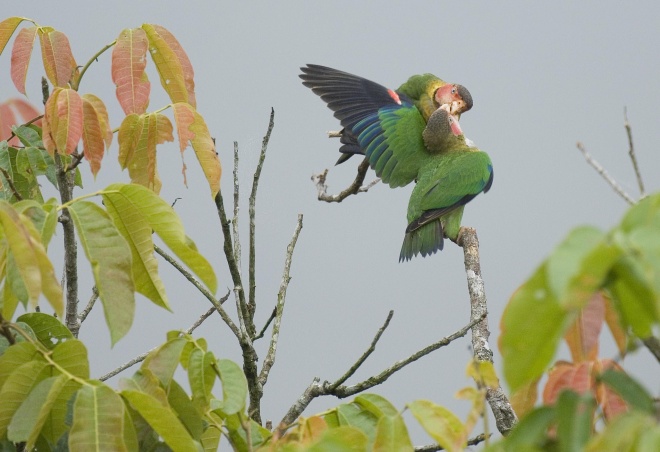
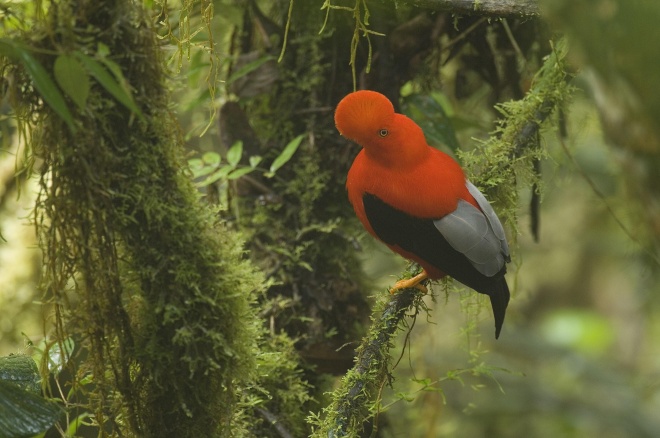
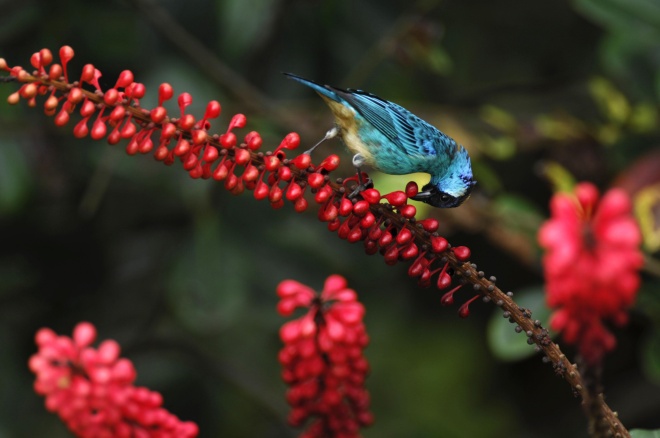
Recognised as an Important Bird Area (IBA), Los Cedros boasts more than 400 species of birds including over a dozen species of hummingbirds that whizz through the forest, some only an inch long, the stunning Andean cock-of-the-rock, the toucan barbet, and the colourful golden headed quetzal, as well as the highly endangered black-and-chestnut eagle (Spizaetus isidori).

Herpetology

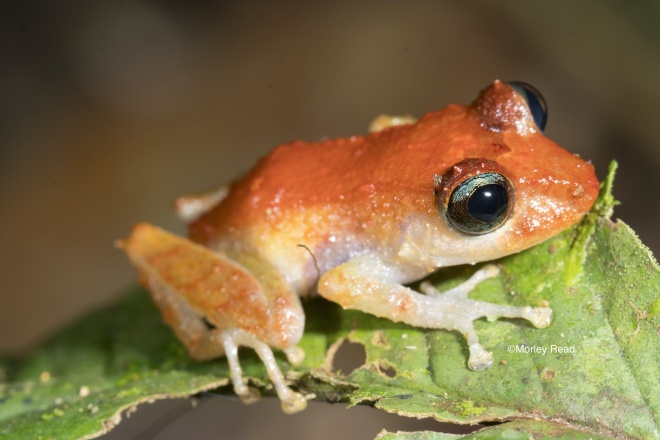
The reserve is also home to numerous species of snakes, lizards and frogs, often best seen at night. Many of these species are rare and endangered, like the rainfrog species that is only known from Los Cedros, Pristimantis cedros and another that is only known from Los Cedros and one other locality, Pristimantis mutabilis.

Invertebrates

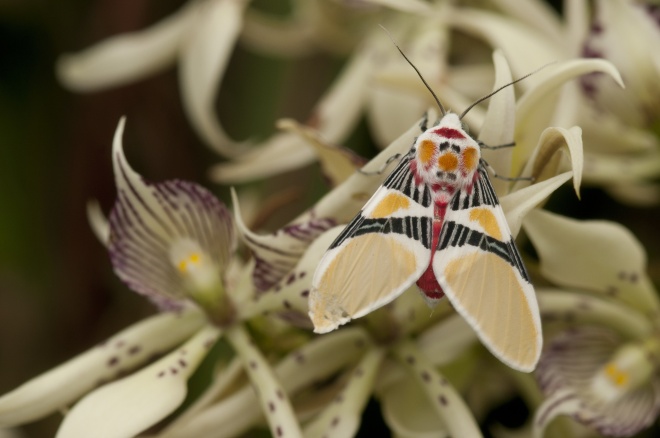
Nonetheless, it is the invertebrates that dominate. In Los Cedros, there are literally hundreds of species of nocturnal moths and thousands of species of butterflies, captured in stunning photos taken by visitors and researchers. There are a huge number of ants, beetles, spiders, flies and bees, many of which are undescribed.

Threat

However, the stark reality is that this reserve, despite being hailed as a priority area of conservation by the Ministry of Environment is under imminent threat from a Canadian mining company, Cornerstone Capital Resources, which was given a permit for gold mining in collaboration with the Ecuadorian state mining company ENAMI. The court has revoked the exploration licenses of both these companies. However, they have ignored the ruling and continued to explore, illegally. Road construction for mining and exploration practices could result in major deforestation and contamination of pristine rivers.

Since then, the Constitutional Court, the highest court in Ecuador, chose to hear the case in order to set a precedent for the application of the constitutionally guaranteed Rights of Nature within legally titled Protected Forests and we are awaiting the outcome of this hearing. The communities surrounding Los Cedros played an important role in protesting against the mining and advocating for the mining companies to leave the protected forest which is their future. For more info on the mining situation click here.

Update

After many months of waiting, Ecuador’s Constitutional Court has now voted in favour of Los Cedros, banning all mining activity within the reserve.

Read more about this historic result.


"To visit Los Cedros is to reach one of the most diversely, teemingly alive places in the world. I was astonished by the days I spent there, and inspired by the courage and power of the 2021 Rights of Nature ruling from the Constitutional Court, which has - for now - helped save this irreplaceable cloudforest from death-by-mining."

Robert MacFarlane, British author

Current priorities

Rainforest Concern has helped Los Cedros over many years with emergency funds when urgent conservation action has been required. In response to continued threats to this incredibly diverse area, we are now focusing on a long-term partnership and strategy to help ensure the future sustainability of this special Reserve. We are working together to conserve this extraordinary habitat and the species who depend on it, and we will strive to support their ongoing work with the surrounding communities who are so important for its long-term protection.

We need your support to do this, so please help us by making a donation today. Please don’t put this off, we need your help now before it’s too late.

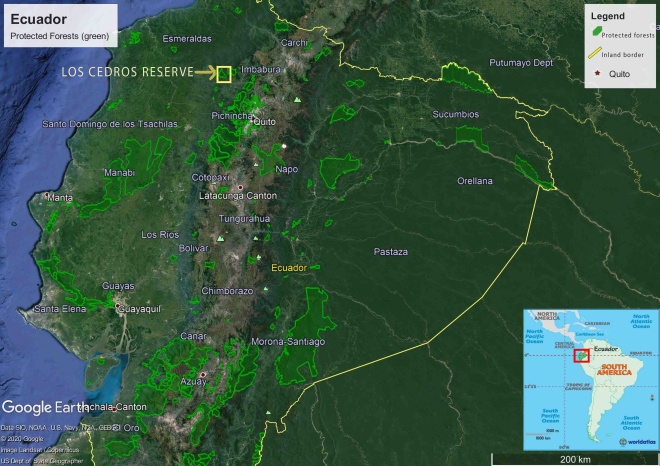
Copy of Los Cedros location in Ecuador Image credit Rainforest Action Group

The Toisan mountain range runs East/West off the western side of the Andes mountains. Running North/South from this Toisan range lies the Cordillera de La Plata of which Los Cedros is the Southern most area. The reserve lies on the ascending slopes of the La Plata range consisting of steep river valleys and high ridges. Los Cedros has altitudes ranging from 1,000 meters at the entrance, up to Cerro de La Plata at 2,700 meters.

Video credit: Marrow of the Mountain

Closeui-chevron-nextui-chevron-prev